
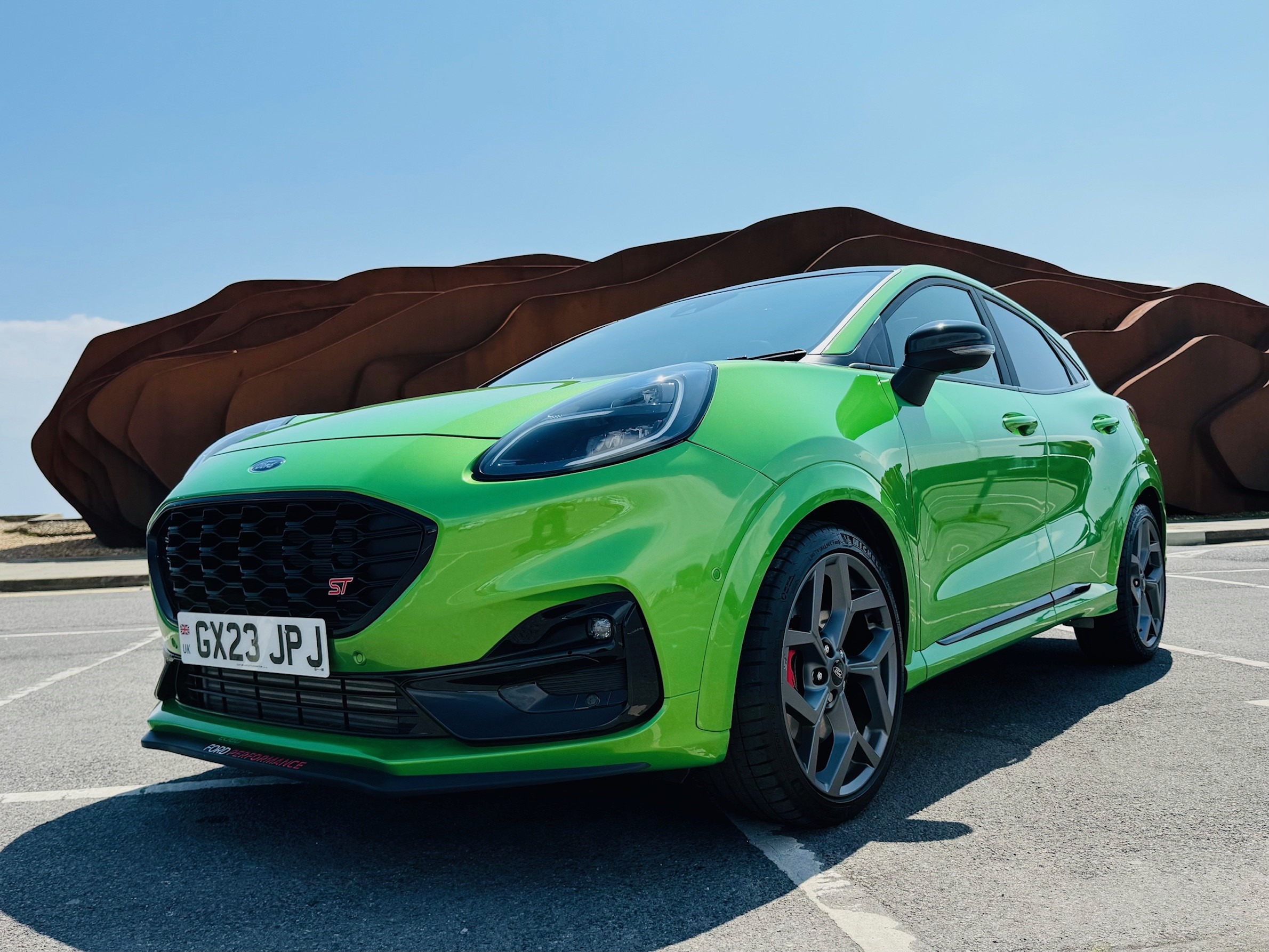
What's the difference? Ford Puma 2020-2024 and Puma MCA (Facelift) 2024 - on
The Ford Puma has been a firm favourite at Cuffs and with the buying public and motoring press alike; being consistently either the best-selling car in the UK or within the top three since its launch in early 2020. Revised in 2024 with an updated and ‘facelifted’ model the changes on the outside are subtle, but what exactly are the key differences?
On the outside: Subtle Evolution
From the front, the most obvious way of telling the difference is by looking at the nose. On 2020-2024 models the Ford oval sat at the top of the bonnet just above the grille.
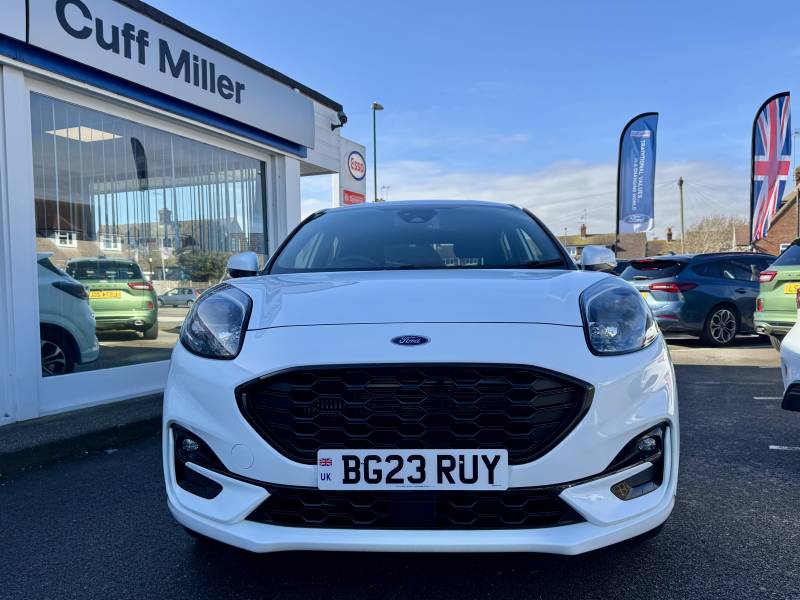
For the 2024 facelift, Ford designers updated the front end by relocating the Ford badge directly into the centre of the grille, shifting from blue and chrome to a larger blue and white oval.
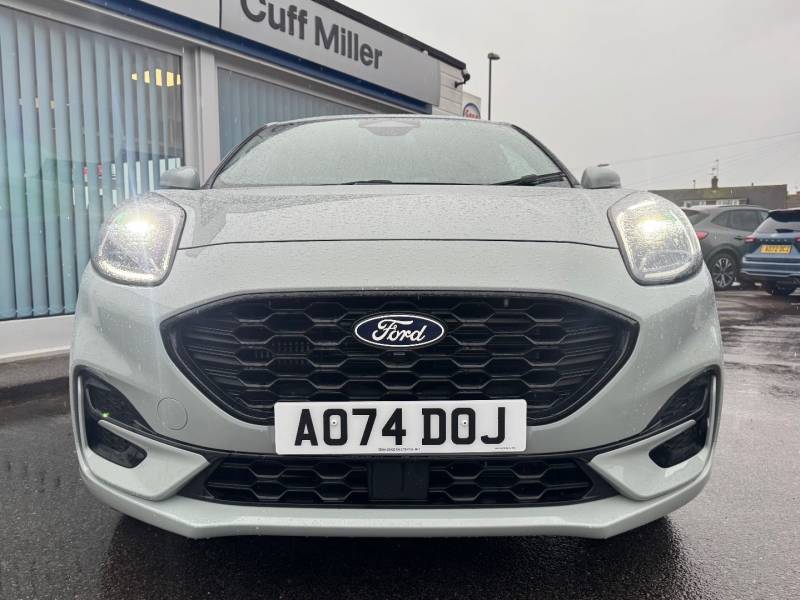
The LED headlamps also received an update, with the day running lights also changing profile and the deletion of front fog lamps. Adaptive headlamps adopting an updated "Puma slash" for a more aggressive look.
At the back, both cars are very similar with the notable change for the 2024 model being that the rear exhaust tailpipe is now concealed behind the rear bumper. On earlier sportier versions, such as ST-Line trims, you would often see a visible exhaust tip poking out from the lower diffuser.
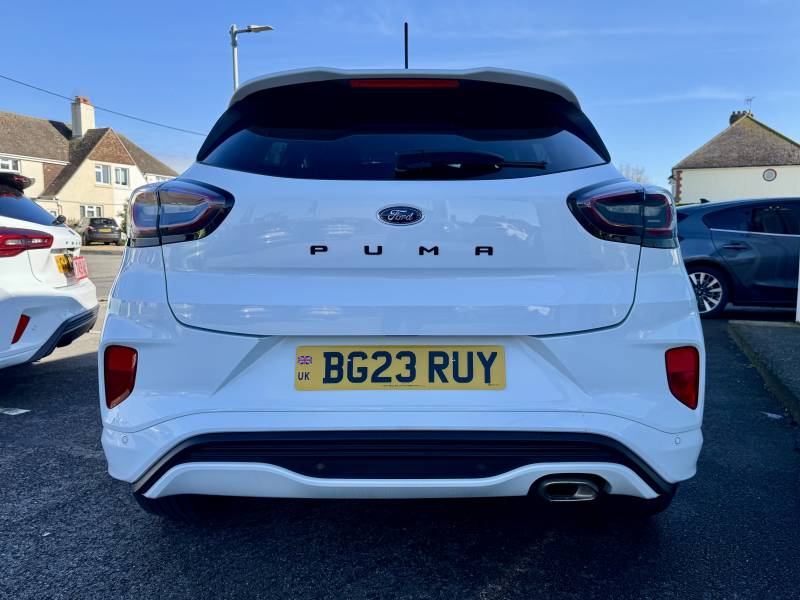
2020-2024 Puma ST-Line
Elsewhere, chrome is now deleted on Titanium models, opting for black trims for a more modern aesthetic and a range of new aerodynamic alloy wheel designs join the range.
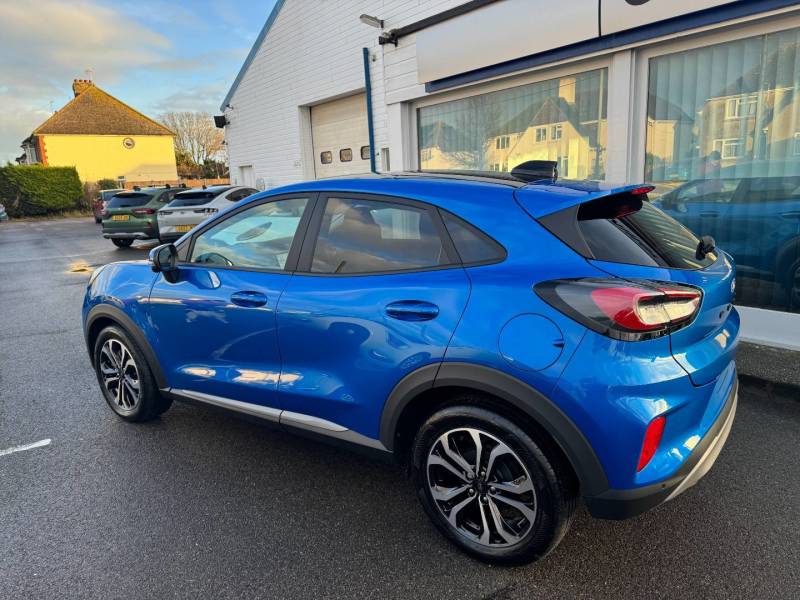
2024-on Puma Titanium
In 2025, the electric Puma Gen-E also joined the range, with the most notable difference being the lack of front grille and the ‘moustache’ styling cue taken from the Mustang Mach-E
The Interior: A Digital Revolution
The real difference between the Pumas is the inside. Whereas the pre-facelift featured a number of physical controls and a smaller central screen, the facelift focuses on a cleaner, "button-free" cockpit, with most controls moving to touch screen.
- Bigger Screens: The old 8-inch floating display has been replaced by a massive 12-inch central touchscreen running the latest SYNC 4 system, which is significantly faster and supports wireless Apple CarPlay and Android Auto.
- Digital Dials: Drivers now get a large 12.8-inch digital instrument cluster as standard, allowing for more customisation than the previous version.
- Minimalist Controls: Many physical buttons, including the climate control dials, have been moved into the touchscreen interface for a cleaner, more modern look.
- New Steering Wheel: The wheel now features a squared off design with a flat top and bottom, making it easier to see the new digital dials.
- Indicator and wiper controls: Now moved to the left hand stalk, with the drive selector in the traditional wiper stalk spot on the ‘Gen-e’ electric models.
- Megabox: Both facelift and pre-facelift cars feature the ‘Megabox’ a drain-plug equipped storage box under the boot floor which can offer around 80 litres of extra storage space. On the Puma Gen-e this is even larger, offering a whopping 145 litres
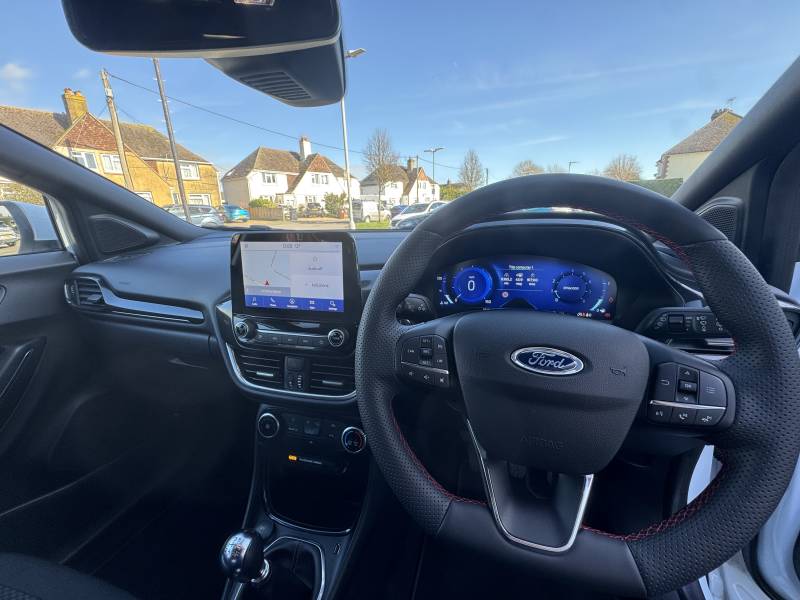
Puma ST-Line 2020-2024 interior
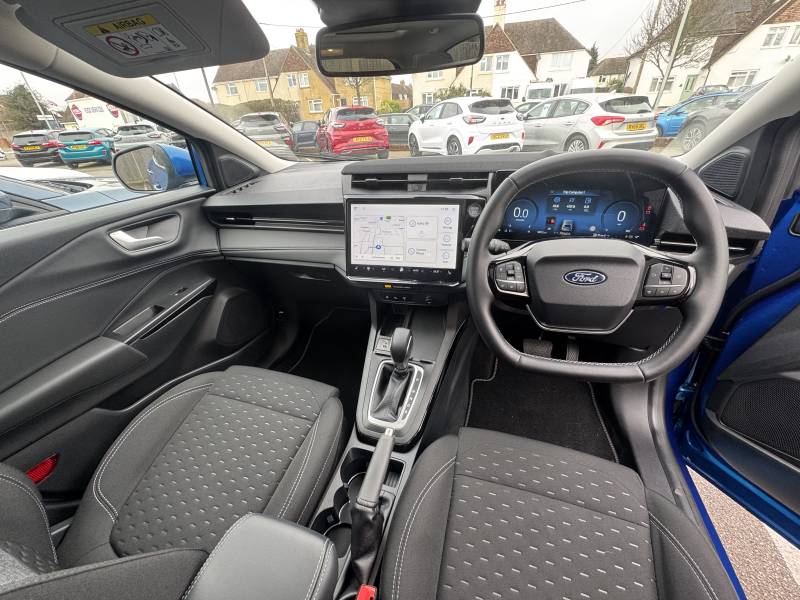
2024 - Onwards Puma Titanium interior
Powertrains
Engine: Excepting the Puma ST, all Pumas using an internal combustion engine (ICE) are powered by the award winning 1.0 litre Ecoboost engine. Power outputs included 125ps and 155ps from launch with almost all featuring mild-hybrid assistance (mHEV) for added fuel efficiency and performance/ (more about how this works here). Later, mHEV became standard for all 1.0 Ecoboost models. Post 2024 models in 1.0 litre, non ST guise are 125ps as a manual and either 125ps or 155ps as a 7-speed automatic.
A 200PS 1.5 litre Ecoboost engine was also available in the Puma ST, focused on performance and arriving to critical acclaim, the ST was designed for the enthusiastic driver and was later joined by a 170ps 1.0 Ecoboost (mHEV) automatic. The 200PS 1.5 was later discontinued, meaning all facelift ST models are now a 170ps 1.0 Ecoboost mHEV automatic.
Electric: From 2025 the all-electric Puma Gen-E joined the range, with a 43.6kwh (usable) battery and a range of around 233miles.
Summary
| Feature | 2020 – 2024 (Original) | 2024 – Onwards (Facelift) | Puma Gen-E (Electric) |
|---|---|---|---|
| Ford Badge | On the bonnet | In the centre of the grille | In the centre (closed grille) |
| Infotainment | 8-inch "Floating" Screen | 12-inch Integrated Screen | 12-inch Integrated Screen |
| Software | SYNC 3 | SYNC 4 (Faster + Wireless) | SYNC 4 (Faster + Wireless) |
| Driver Display | 12.3-inch Digital Cluster | 12.8-inch Digital Cluster | 12.8-inch Digital Cluster |
| Climate Controls | Physical Dials & Buttons | Integrated into Touchscreen | Integrated into Touchscreen |
| Boot Space | 456 Litres (inc. Megabox) | 456 Litres (inc. Megabox) | 523 Litres (inc. Gigabox) |
| Engine |
1.0 125ps (early) 1.0 125ps mHEV 1.0 155ps mHEV |
1.0 125ps mHEV 1.0 155 mHEV (auto only) |
Electric Motor |
| ST Engine | 1.5L (200PS) or 1.0L mHEV (170PS) | 1.0L mHEV (170PS) Only | N/A |
| Transmission | Manual or Automatic | Manual or Automatic | Single-Speed Automatic |
See it for yourself at Cuff Miller in Littlehampton
Which one is right for you? We’d recommend coming down and trying both versions out for yourself and see which suits best. Both versions are great to drive, with well thought out and capacious luggage space. If you prefer the tactility of physical control buttons and knobs, then the 2020 onwards car may be the one for you. If bigger screens, wireless connectivity and a more modern interior look are more your thing, then the 2024 onwards facelift could be the one for you.
You can explore both generations here at Cuff Miller in Littlehampton, where we’d be happy to show you exactly how these changes feel from the driver's seat.
Why not take a look at our vehicles in stock here, or contact us to find out more!
By Mike Gates, Cuff Miller